Performance Forecasting Model
Performance Forecasting
Model
I built an end-to-end sports analytics engine to see if data could explain match outcomes better than basic cricket intuition. By chewing through two seasons of ball-by-ball logs, this dashboard strips away the noise to highlight the tactical decisions that actually win games.
Most cricket analysis stops at batting averages and win rates. That's boring. I wanted to know if winning the toss actually matters, or what specific target score forces a batting collapse. To get there, I had to wrangle massive event logs into something a strategist could actually read at a glance without getting lost in the numbers.
The Methodology
1. Data Engineering
I pulled the raw ball-by-ball data and filtered it down to the 2024 and 2025 seasons using MySQL. I stripped out cancelled matches and playoff anomalies to build three clean reporting tables.
2. Exploratory Analysis
Before building anything visual, I used Python to map the terrain. This is where the real story emerged-like seeing the exact dot-ball volume required to choke a run chase.
3. Executive BI
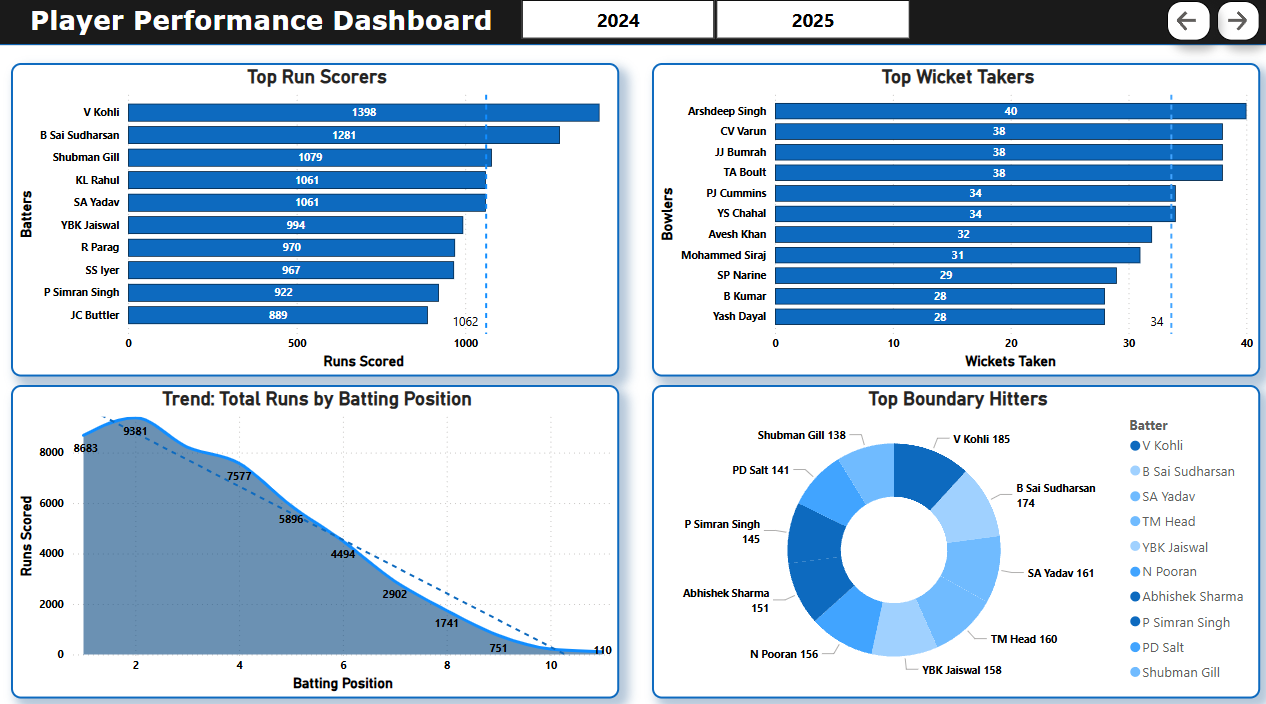
I built a four-page Power BI dashboard. Instead of relying on static charts, I used dynamic DAX functions so a user can slice the data by team or venue without breaking the views.
The Deliverables
Key Findings
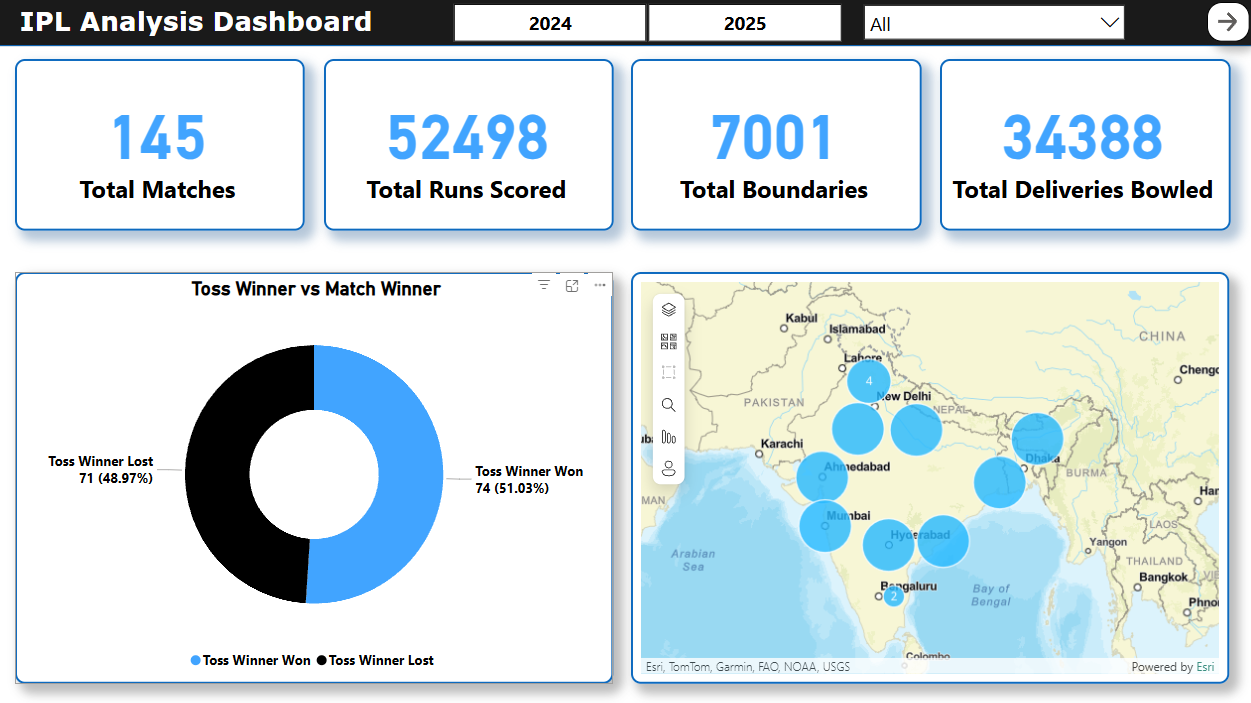
Toss wins don't equal match wins.
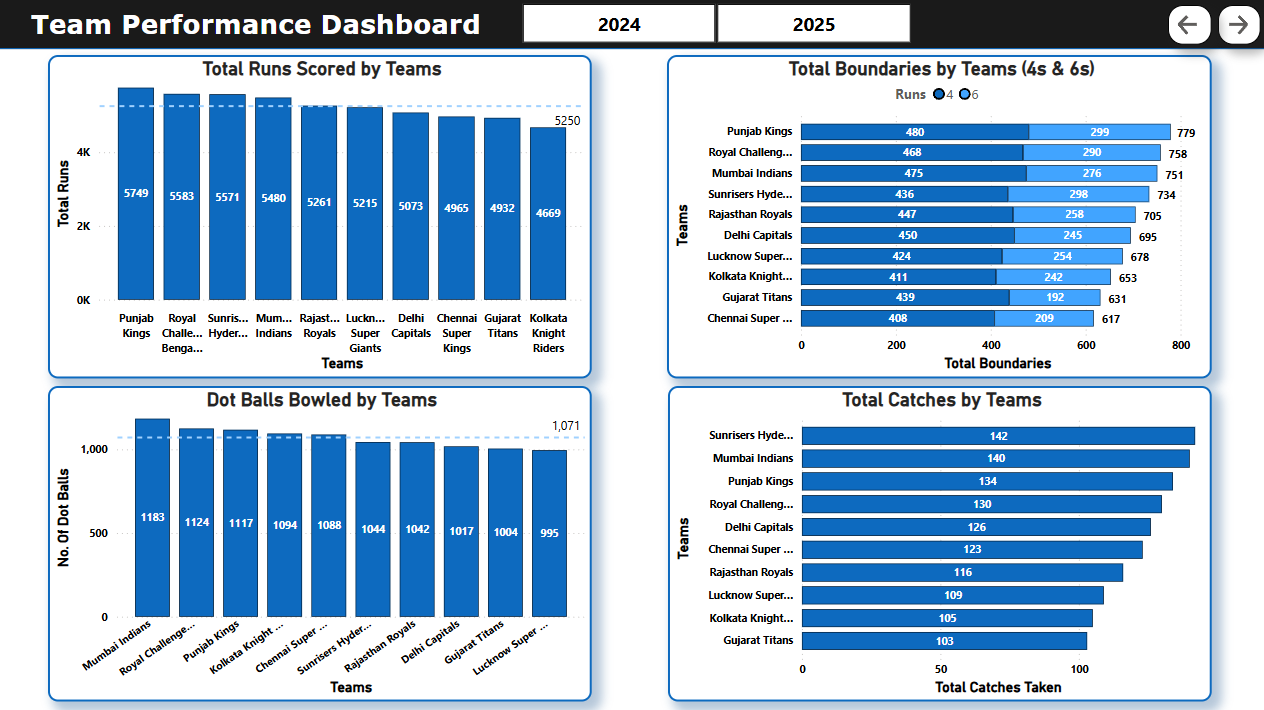
Everyone assumes the toss dictates the game. The data proves it doesn't. Execution, specifically maintaining a high dot-ball percentage, correlates much stronger with a victory than winning the coin flip.
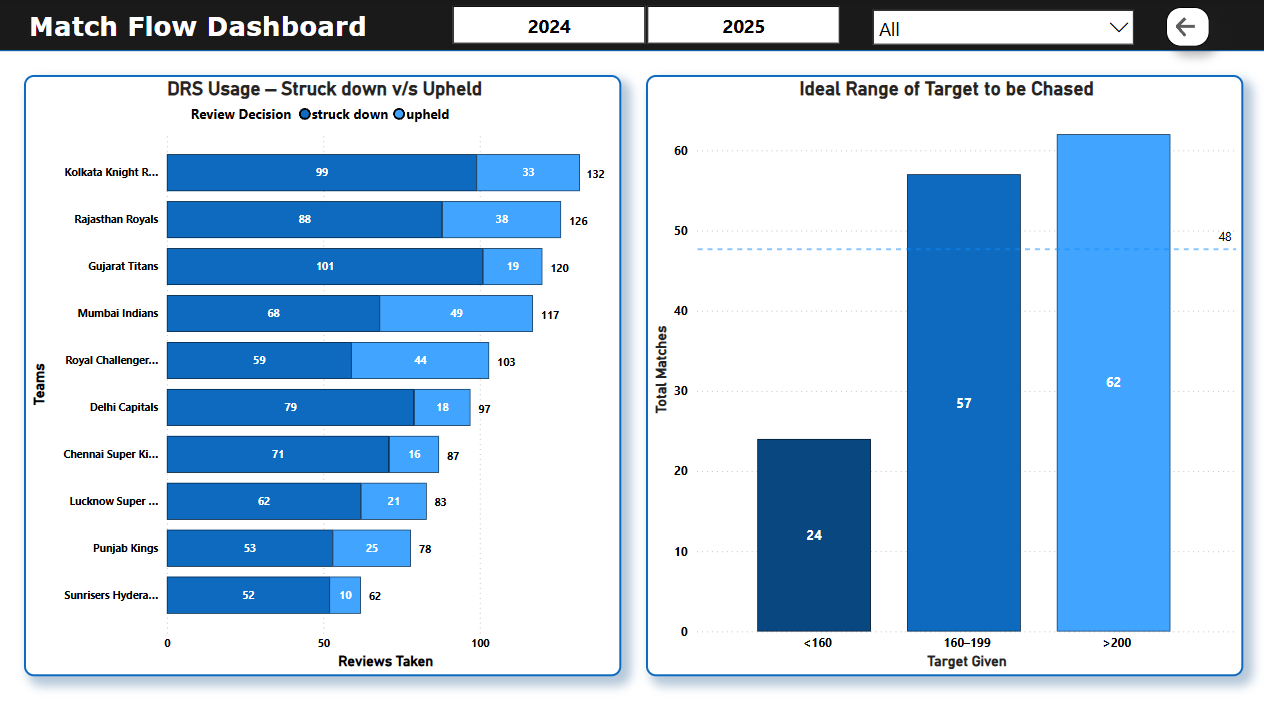
200 is the new normal.
The run environment has shifted heavily. Teams routinely chased targets over 200, which entirely changes how middle-order batters have to pace their innings.
Next Steps: Predictive modeling.
Right now, this dashboard looks backward. My next move is wiring up Scikit-learn to predict match outcomes live based on real-time stadium metrics.